Choose stabilizer by the fabric, not by the design: cut-away for anything that stretches, tear-away for stable woven fabric, wash-away when nothing may remain behind the stitches. A fourth product, water-soluble film, goes on top of fabrics with pile. Most projects need one of those four, and the chart below matches them to common fabrics.
What Stabilizer Actually Does
Every stitch pulls the fabric slightly toward the center of the shape being filled. Multiply that by ten thousand stitches and unsupported fabric draws in, ripples and distorts. Stabilizer is a non-stretch layer hooped under the fabric so that the needle works on something firm.
It has a second job after the hoop comes off. On a knit, the stabilizer left behind keeps the embroidery from stretching out of shape each time the garment is worn and washed. That is the reason for the old rule: if you wear it, don't tear it.
Cut-Away: For Anything That Stretches
Cut-away is a soft, permanent, non-woven sheet. After stitching, you trim it with scissors to about a quarter inch from the edge of the design, with rounded corners, and the rest stays in the garment for life. Do not cut closer than that; it is easy to nick the stitches.
Use it on T-shirts, onesies, sweatshirts, hoodies, polo shirts, leggings and fleece. It comes in weights from about 1.5 ounces (light) to 3 ounces (heavy); a medium weight of around 2.5 ounces handles most designs. For a dense design, add a second layer instead of hunting for something heavier. Two layers of a lighter stabilizer often do better than one heavy one, especially on light fabric.
No-show mesh (also called poly mesh) is a thin, sheer cut-away, usually 1.5 to 2 ounces. It is the one to use on light-colored or thin knits, where a regular cut-away would show through as a square shadow on the front. One layer suits light designs; two layers, the second turned crosswise to the first, give more support with little added bulk.
Tear-Away: For Stable Woven Fabric
Tear-away is a paper-like sheet that you pull off once the design is done. It supports the fabric during stitching and leaves almost nothing behind, so it suits items where the back is seen and the fabric does not need permanent help: denim, canvas, twill, quilting cotton, linen, tea towels.
To remove it, lay the piece face down, support the stitches with the fingers of one hand and tear the stabilizer away with the other. Two light layers tear more cleanly than one heavy one, because you can remove them one at a time.
Tear-away is a poor choice under a dense design on a soft fabric. The needle perforates it until it falls apart mid-design, and the support is gone when you need it most.
Wash-Away: When Nothing Should Stay
Wash-away stabilizer comes in two forms that do different jobs.
- Fibrous wash-away looks and feels like a soft fabric. It is strong enough to hoop on its own and to carry stitches, so it is used as backing for sheer fabric such as organza, for freestanding lace, and for patches or in-the-hoop pieces that should have a clean edge.
- Water-soluble film is thin and clear. The regular weight is too weak to act as backing; its job is to sit on top of the fabric as a topper. Heavier films exist for very dense freestanding designs, and they feel closer to a sheet of vinyl.
After stitching, trim away as much as you can, then rinse under warm running water until the stiffness is gone. Rinse completely before the piece dries; whatever is left in the fabric dries stiff.
Stabilizer by Fabric
| Fabric | Backing | Topper | Note |
|---|---|---|---|
| T-shirt, onesie (jersey knit) | No-show mesh cut-away, fused or sprayed in place | None | Never stretch the knit in the hoop |
| Sweatshirt, hoodie | Medium cut-away | Film, if the surface is fuzzy | Turn inside out to hoop a small garment |
| Pique polo | Medium cut-away | Film | The topper keeps stitches out of the texture |
| Quilting cotton, linen | Medium tear-away | None | Cut-away for very dense designs |
| Flour sack tea towel | Light tear-away for line designs; medium cut-away for anything fuller | None | Thin fabric; choose light, open designs |
| Denim, canvas, twill | Medium tear-away | None | Stable enough for dense fills; cut-away on denim clothing |
| Terry towel | Medium tear-away or fibrous wash-away | Film | Cut-away for dense designs; see the towel guide below |
| Fleece, minky, velvet | Medium cut-away | Film | Float instead of hooping to avoid hoop marks |
| Organza, tulle, voile | Fibrous wash-away | None | Rinse out completely |
| Vinyl, faux leather | Medium tear-away, hooped alone | None | Float the vinyl; hoop marks are permanent |
| Felt | Tear-away | None | Cut-away if the felt is thin and soft |
Stabilizer makers do not agree on every row. OESD lists denim with the cut-away fabrics, and Embroidery Library prefers a 2.5-ounce cut-away even on tea towels unless the design is very simple. When a tear-away stitch-out puckers, cut-away is the next thing to try.
Baby clothes sit in the first row, which is where the mesh earns its place: soft against skin, invisible from the front, permanent.

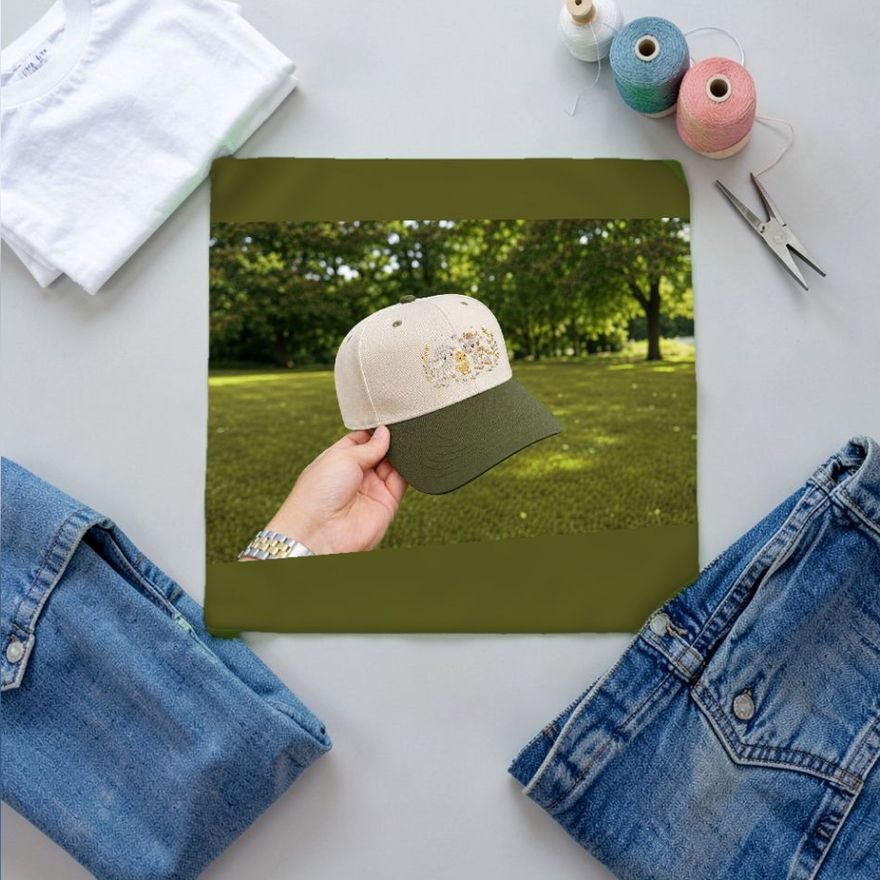
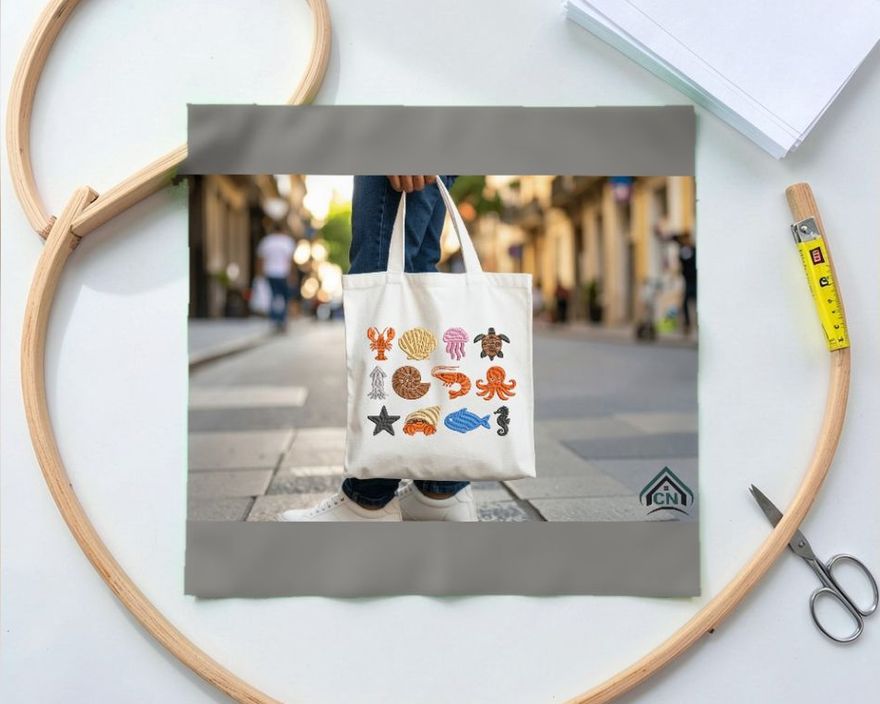
Cute Safari Animal Embroidery Bundle
See the listing ↗
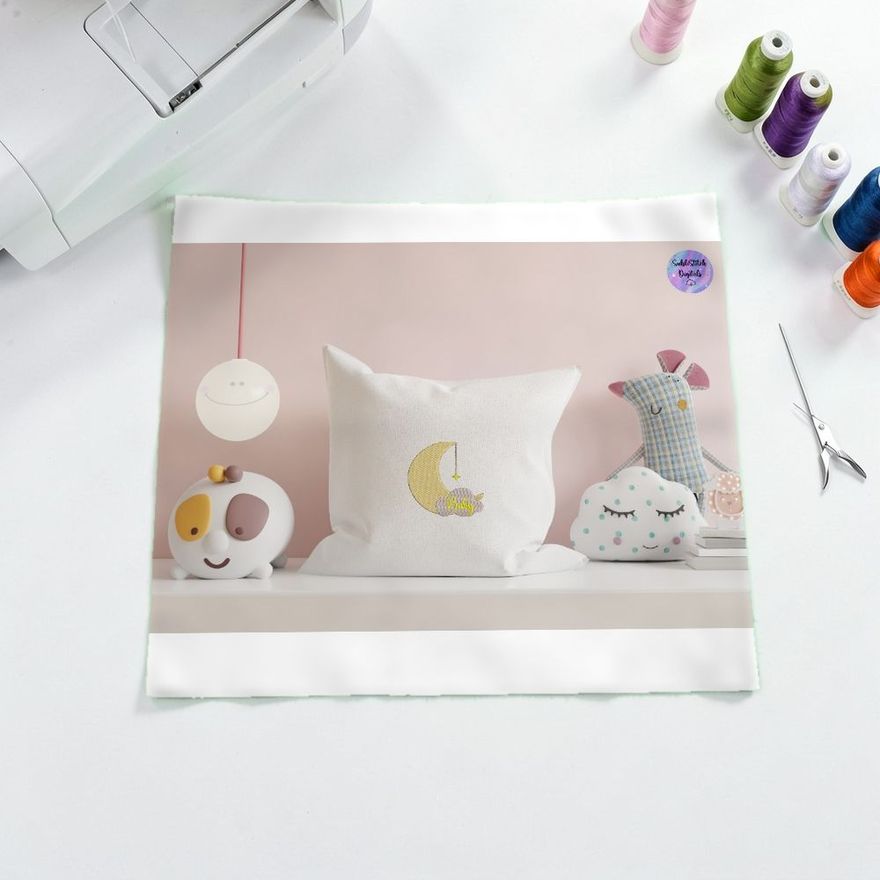
Moon Star Baby Embroidery
See the listing ↗
Mama's Little Bestie, Baby Embroidery
See the listing ↗From the collection Baby & Animal Embroidery. New Creative Fabrica members get 10 free downloads, and any of these can be one of them.
Toppers for Pile and Texture
On terry, fleece, minky, velvet and pique, stitches sink between the loops or ridges and the design looks thin and patchy. A sheet of water-soluble film laid on top holds the pile down while the machine stitches over it.
Lay the film over the hooped area and secure it with a basting stitch, a few pins outside the stitch area, or a light dampening at the corners so it sticks. When the design is finished, tear away the large pieces and dab the rest with a damp cloth. What remains under the stitches dissolves in the first wash. The full method is in the guide on how to embroider towels.
For fabrics that cannot be wetted, a heat-away film does the same job. You iron over it until it shrivels into small balls, then brush them off.
Fusible and Sticky Stabilizers
Both solve the same problem, fabric that moves against its backing, in different ways.
Fusible cut-away and fusible mesh have a light heat-activated adhesive on one side. Iron it to the back of a knit before hooping and the fabric can no longer stretch or creep. This is the most reliable fix for puckered T-shirt embroidery.
Sticky stabilizer is tear-away with a pressure-sensitive adhesive under release paper. You hoop it paper side up, score the paper with a pin, peel it away inside the hoop and press the item onto the exposed adhesive. This is called floating, and it is how you embroider things that cannot be hooped: collars, cuffs, socks, small pockets, thick towels. There are wash-away sticky stabilizers too, for projects where nothing may remain.
Temporary embroidery spray adhesive turns any stabilizer into a sticky one. Spray the stabilizer lightly, never the fabric, so that most of the adhesive leaves with the stabilizer, and do it away from the machine.
Adhesive builds up on the needle. If the thread starts to shred on a sticky or sprayed project, wipe the needle with rubbing alcohol or change it.
There is also a soft fusible cover sheet made to be ironed over the back of finished embroidery on baby and children's clothes. Its job is comfort, not support: it stops the knots and bobbin thread from rubbing the skin. Sulky suggests cutting its version with pinking shears, because a zigzag edge stays down better through repeated washing.
Why Embroidery Puckers
Puckering has a short list of causes. Check them in this order:
- The fabric was stretched in the hoop. It relaxes when released and gathers around the stitching.
- The stabilizer is too light for the design, or tear-away was used where cut-away was needed.
- The fabric and stabilizer were not held together. Fuse them, spray them, or hoop both layers firmly.
- The design is too dense for the fabric. A solid fill meant for a jacket back will pucker a thin tea towel however it is stabilized. Lighter fabric needs a more open design, such as redwork or a sketch-style fill.
- The needle is dull or the wrong type, pushing fabric down instead of piercing it. The guide to thread and needles covers what to fit.
- Top tension is too tight.
- The fabric was not prewashed and shrank around the stitching in its first wash.
The Stabilizers in This Guide
These are the types described above. Start with the first three and add the others when a project calls for them.
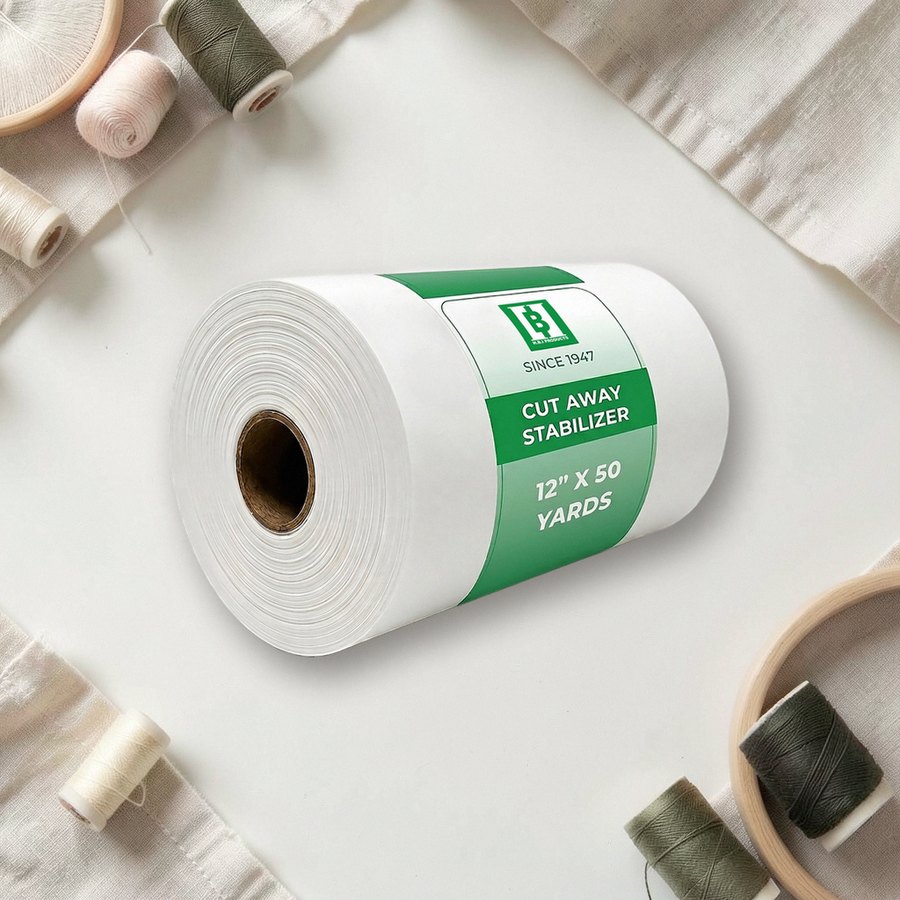 Medium cut-away stabilizer rollHBI H.B.I. PRODUCTSSee it on Amazon
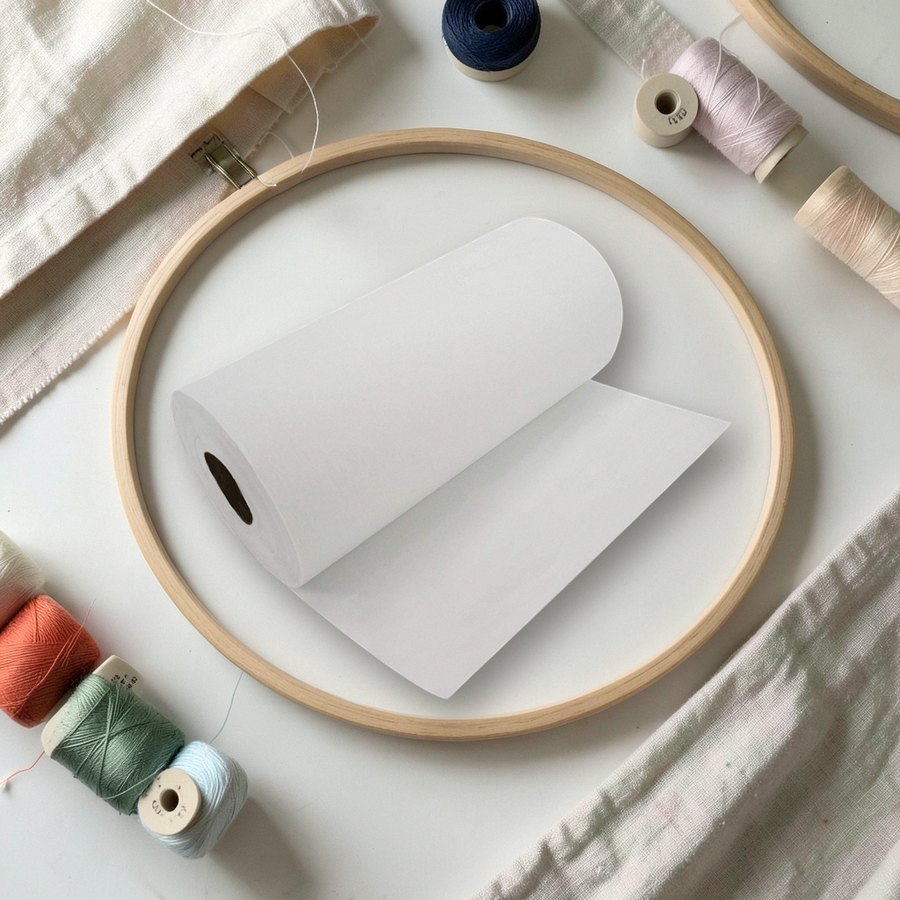 Tear-away stabilizer roll, 12 inchNew brothreadSee it on Amazon
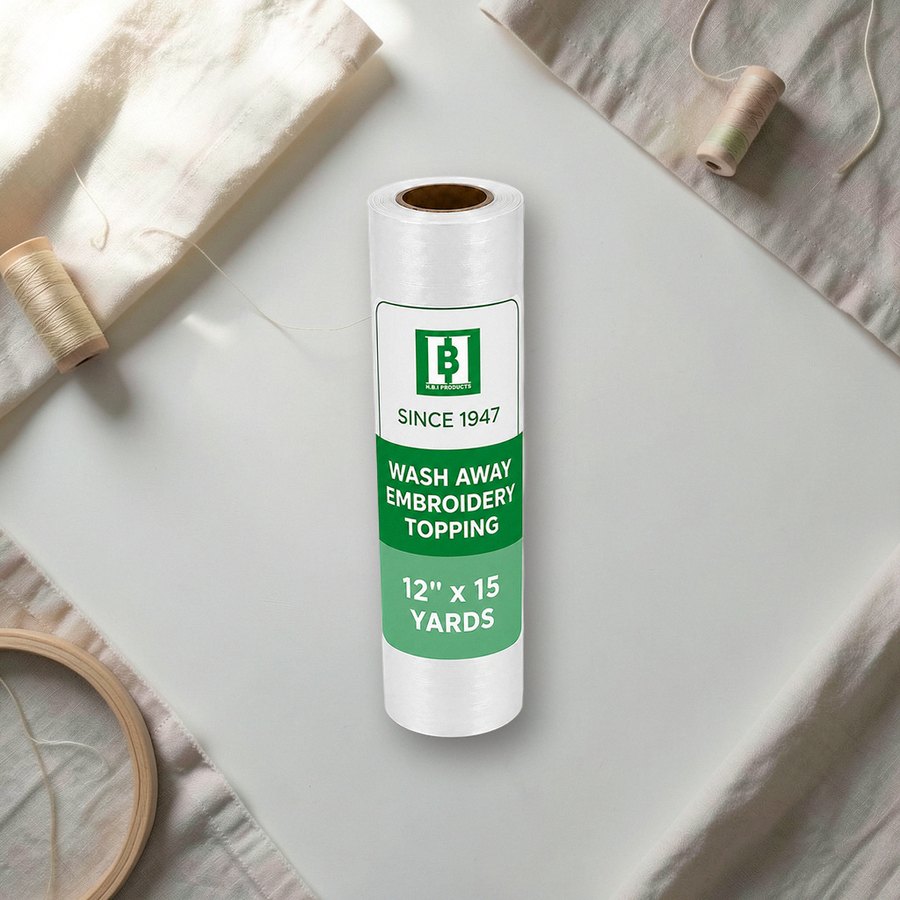 Water-soluble film topperHBI H.B.I. PRODUCTSSee it on Amazon
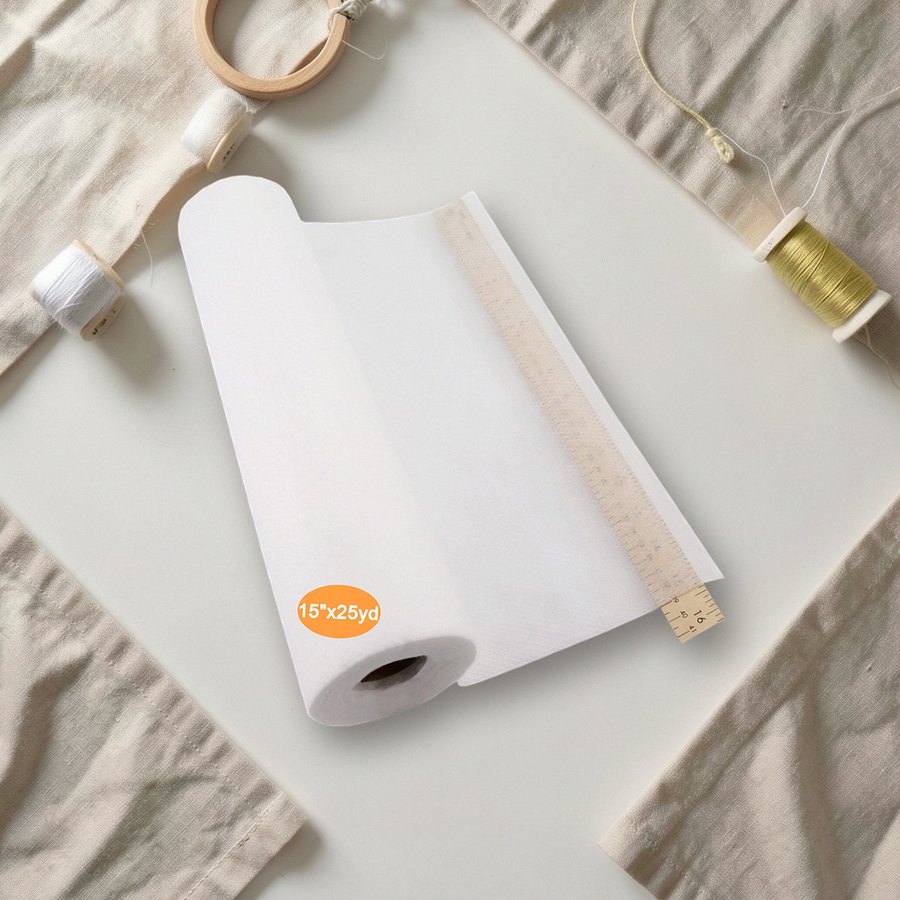 No-show mesh cut-away stabilizerNew brothreadSee it on Amazon
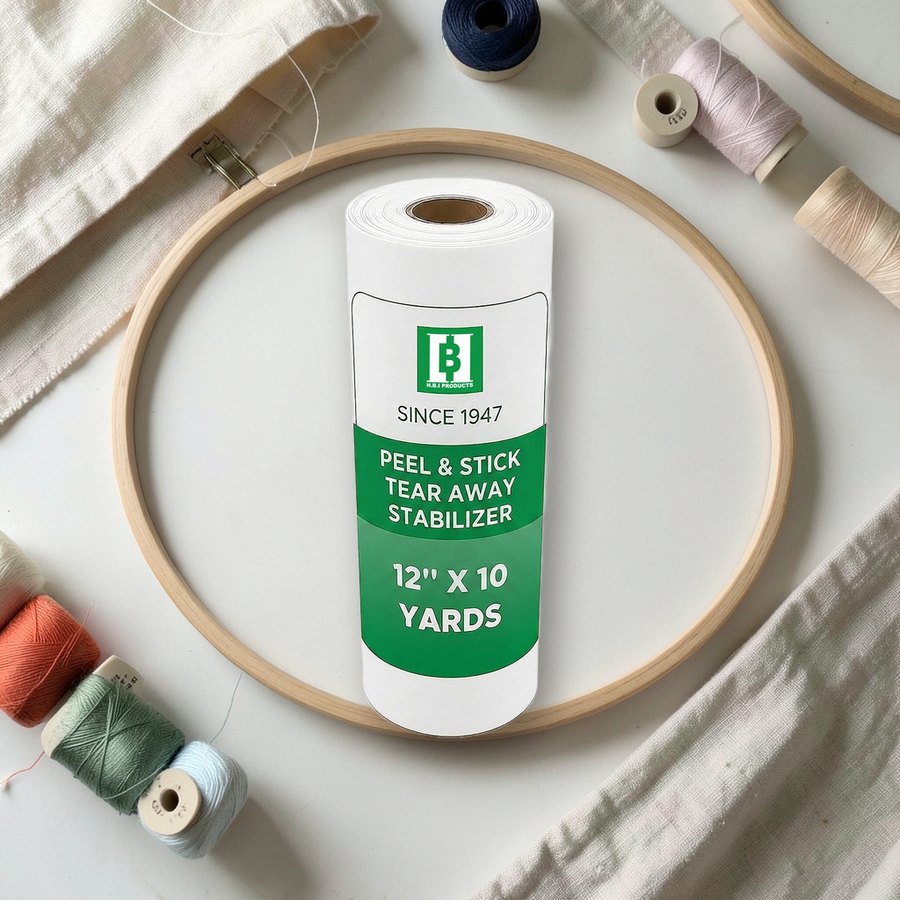 Peel-and-stick tear-away stabilizerHBI H.B.I. PRODUCTSSee it on Amazon
As an Amazon Associate we earn from qualifying purchases.
What to Buy First
A roll of medium cut-away, a roll of medium tear-away and a roll of water-soluble film cover the great majority of home projects. Add no-show mesh when you start on T-shirts and fibrous wash-away when you try lace or patches. Applique on sweatshirts uses the same medium cut-away, and the steps are in how to do machine applique. If baby clothes are your first target, the baby and animal embroidery collection is a good place to choose a small design and test your mesh on a spare onesie before the real one.
Collections This Guide Draws On
Baby & Animal Embroidery13 hand-picked · open the collection → Quote & Towel Embroidery11 hand-picked · open the collection →
 Applique Designs13 hand-picked · open the collection →